Tuesday, 16 June 2009

Moscow Film Festival


A very quick post after an absence in Russia - of which more in due course - pointing to the Moscow Film Festival. Though it's international, obviously here I'm looking mostly at the Russian/Soviet stuff. There are a couple of potentially interesting strands.

The opening film is Pavel Lungin's The Tsar (Царь) starring, as Metropolitan Philip, Oleg Yankovsky, who died about a month ago.

Last year's Socialist avant-gardism continues with part 2, including a couple of things I'll be sad to miss, notably Kozintsev's quite rare wartime propaganda shorts. Medvedkin's Miracle Woman (Чудесница, 1936) I remember as a typically enjoyable bit of knockabout. Sadly the MIFF blurbs generally give little indication of what is avant-garde about the films but I'd be interested to see an early foray into that territory by Ivan Pyriev, director of the notorious Cossacks of the Kuban (1949), a musical comedy that celebrated the way that Soviet farmers regularly exceeded their wheat quotas, or Sergei Yutkevich who, after his early wildness, interleaved most workaday productions with under-the-radar criticisms. They've chosen his last film, Lenin in Paris (Ленин в Париже, 1981), which, from the still seems a bit more promising though the published script that I have gives no indications of it being anything other than you would expect.
Last year there was a rather odd collection of films marking the centenary of the first film showing in Russia (Stenka Razin an obvious choice but, for all its popularity, Vainshtok's 1938 Treasure Island?!) This year three films mark the seventieth anniversary of the start of the war - interesting that they take it as 1939, rather then 1941, when the USSR was invaded. Given how massive a subject it is for Soviet cinema it would have been a good opportunity to do an archival retrospective (there was something similar in Berlin a few years ago) but they chose a very partial view with three contemporary looks back.

The Georgian strand reminds us just how strong that country's cinema is. There's a neat circularity in From The Vow to Repentance - the first, directed by Mikhail Chiaureli, is an early highpoint in Soviet cinema's hagiography of Stalin, while Abuladze's Repentance (1984) shatteringly dismantles the myth. Sadly, The Vow is the earliest film being shown, so we don't get to see any Georgian silents (the country was a late starter but strong). 

The Chiaurelis (Mikhail, wife Veriko Andzhaparidze and daughter Sofiko) were important in cinema in the Causasus, but even more so were the Shengelayas. Nikoloz (1903-43) was a pioneer (Elisso, 1928 is extraordinarily beautiful), and his two sons Eldar  (b.1933) and Georgi (b.1937) respectively directed the hilarious comedy Blue Mountains, or an Unbelievable Story (1983) and the blissful portrait of the naive painter Pirosmani (1969). When
Sofiko C and Georgi S married, the two dynasties were linked and had a massive impact on Soviet cinema, with a welter of relations, including their director-son, another Nikoloz. Andzhaparidze was also aunt to Georgi Daneliya, linking to another whole strand. I tried working out a family tree but ran out of paper. Apart from returning to the Stalin myth, Repentance neatly brings things full circle as Andzhaparidze (whose family, despite the Chiaureli connection, were not immune from the Terror) appears in it. In fact, it's a bit of a family affair as various clan members were involved.

Elsewhere, there's documentary about Prokofiev (which I'll be reviewing at greater length later in the year) as well as tributes to Pavel Lungin, Armenian documentarian Harutyun Khachatryan, some of Karen Shakhnazarov's favourite films (good to see Some Like it Hot in there) and a massive animation programme

Beyond Russia and the former USSR, as Britain finally gets the release of Wajda's Katyn Moscow is showing his new film Sweet Rush (Tatarak), dedicated to the cinematographer Edward Kłosiński and narrated in parts by his widow Krystyna Janda.

Finally, it's worth noting that the Skolimowski tribute includes both Le Départ and Deep End. Skolimowski's first western film has been available on DVD in the past (though he thinks another, more widely available one may be in the offing) but hopefully this is a sign that Deep End's long unavailability in some infuriating rights nightmare has been resolved.

Saturday, 2 May 2009

New Europe Film Festival


A quick note about the New Europe Film Festival which runs at the Barbican from May 4th to 6th: six films from new EU member states, concentrating on 20-30 year-olds whose lives crossed from socialism into capitalism.


The Polish contribution is Andrzej Jakimowski's second feature Tricks (Sztuczki), a gently touching story of how two children maintain hope in the face of family breakdown.

In Vladimir Michálek's Of Parents and Children (O rodicích a detech) a father and son take their monthly walk around the back streets of Prague, revisiting and coming to terms with past wounds.

Overnight from Hungarian director Ferenc Török follows 24 hours in the hectic life of Peter a broker who is soon to be a father but faces a collapsing love life.

Estonia and Finland collaborated to produce René Vilbre's I Was Here (Mina Olin Siin), a violent, fast-paced story about Rass, who tries to balance his aspirations to be a doctor with his part-time petty crime and drug pushing.

Music (Musika) is another co-production - this time Germany and Slovakia. Living in a cramped flat, part-time jazz saxophonist Martin has to practice at the water plant where he works. But his life changes when he meets Hruskovic, a more dynamic musician, and the nymphomaniac Anca, and they decide to form a band.

Though we do get to hear the 'title song', Cristian Nemescu's Cannes and LFF award-winning California Dreamin' is called, in Romanian, Nesfarsit, literally endless. Since Nemescu died before making the last tweaks to the edit, in tribute, it was released just as he had left it, and in that sense is endless. But more bleakly it reflects on NATO and the west's interventions in the Balkans, the ongoing collaborations and misunderstandings between the two and the sometimes less than enlightened views of the locals.

Altogether the fest gives a capsule view of the struggles of a generation coming to terms with a completely new world.

Tuesday, 14 April 2009

From Nova Scotia...

Nothing to do with film or music, but perhaps a little bit avant-garde - a heads up for From Nova Scotia to London, a new blog, belonging to an artist who works in photography and print-making.     

Sunday, 15 March 2009

Charity concert

A friend has asked me to alert you to a charity concert. Coincidentally I've seen Marina play a couple of times and can vouch that this will be not only a contribution to a worthy cause, but an enjoyable evening. It will also be a rare chance to hear some music by Boris Pasternak, who, before embarking on the literary career that would bring him the Nobel Prize (had he been allowed to collect it) was a composition student at the Moscow Conservatory

The Jimmy Knapp Cancer Fund presents a fundraising piano recital of works by Chopin, Pasternak and Schumann by Marina Primachenko.

The Regent Hall, 275 Oxford Street, London, W1C 2DJ
7:30pm

Tickets are £15 each, to book please send a cheque made payable to "Jimmy Knapp Cancer Fund" and forward to: Laurie Bell, Unity Trust Bank Plc, Congress House, 23-28 Great Russell Street, London, WC1B 3UB. Please state how many tickets you require.

33 Scenes from Life (33 Sceny z Życia)


Małgorzata Szumowska’s latest film, 33 Scenes from Life (IMDb entry here), made an impressive, if claustrophobic opener for the seventh Kinoteka Film Festival.

It begins with a family meal including Jerzy, a journalist, his author-wife Barbara, their artist-daughter Julia and Piotr, her composer-husband. They gently rib each other though there’s a serious undertow and we might think we know where the story’s going. But we’re blindsided when Barbara gets cancer and dies. Shortly afterwards, Jerzy has a fatal heart attack and Julia, having lost both parents, is forced to reappraise her life and work with her husband, her sister, and artistic collaborator Adrian.

33 Scenes is impressively photographed, using a muted palette and, mostly in medium shots. Going for a documentary style meant no blocking – the actors improvise and the camera follows them: hence no close-ups, though the initial idea to shot each scene, Woyzeck-like, in a single take was soon abandoned. One great shot sums up the gradual clarification of the emotional maze. Half-obscured by the doorframe, Julia sits on the bathroom floor talking to Adrian on the phone, but when Piotr enters the scene we gradually work out that what we're actually seeing is partially reflected in a mirror, with the doorways and reflections slightly confused. It adds to the oppressive atmosphere, which is lightened (if that’s the word), by touches of the darkest imaginable comedy.

But most formally surprising are several long musical interludes by Paweł Mykietyn. Acting the part of Piotr’s new orchestra piece, they make one of most impressive and uncompromising film scores I’ve heard for a long time. Though it begins with a semi-impressionistic falling theme dominated by the harp – perhaps inspired by Julia (Peter reveals it in the bedroom during a tenderly comic bedroom scene) – we soon get a Schonbergian variation, and the music continues to intensify: dark, grinding, dissonant, roaring and occasionally rearing up terrifyingly, like something from the 1960s Polish avant-garde. Against such music, shots of the orchestral rehearsals seemed banal and so, pending another idea, they were removed and replaced by black leader. When one of the German producers saw it, he thought they should remain. And so they do, like operatic interludes, bleeding slightly into the surrounding scenes, or even the diegetic, as when the obsessive xylophone is taken over by a bleak oscilloscope. The combination of music and blank screen allow us to contemplate what we’ve just seen and prepares us for the continuation.

As for the title: yes the script originally had 33 scenes but during editing that changed and Szumowska now doesn’t know how many there are. It began as an autobiographical sketch – her father was journalist/film-maker Maciej Szumowska about whom she made the documentary Mój tata Maciej (2005) and her mother the children’s writer Dorota Terakowska. This all proved controversial in Poland, though Szumowska insists that there isn’t a strict 1-to-1 relationship between reality and the film. Perhaps the original idea of doing the film in English would have helped the separation (or perhaps made it more controversial as her parents were quite well known) but in the event she decided that it was a very Polish film that would only work in that language.

Casting Julia was problematic: Polish actresses recognized the autobiographical elements and assumed that they would be playing some form of the director – exactly what she didn’t want! Eventually she saw what she wanted in the German actress Julia Jentsch in Sophie Scholl. Not speaking Polish, she learned the role phonetically and was dubbed, as was the Dane Peter Gantzler as Adrian. But, demanding more direction, Jentsch clashed with Szumowska several times on set, even threatening to leave the film. Fortunately she stuck it out, though they parted on very bad terms. Happily, when she saw the final edit Jentsch was delighted with the result and the two are reconciled.

I won't bother embedding the trailer that's on Youtube as it completely misrepresents the film, so here's part one of Paweł Mykietyn's Cello Sonata instead - you can click through to part two afterwards. Not as dense as 33 Scenes' score and there's not much to see, but enough to make me want to hear more.


Finally, with many East European films, it’s violently pro-smoking: as Szumowska says; “if I want to commit suicide by smoking, that’s my business.”

Wednesday, 11 March 2009

Burnt by the Sun


Stage plays have always provided material for the cinema, but recently there has been a series of productions going the other way (in fact, with The Fly, The Bitter Tears of Petra von Kant and Lost Highway amongst others, you could argue that the preferred ultimate destination is opera). And so the National Theatre is showing Peter Flannery’s adaptation 1994 Foreign Film Oscar-winner Burnt by the Sun, scripted by Rustam Ibragimbekov and director Nikita Mikhalkov.

SPOILER ALERT (throughout)

June, 1936. Colonel Sergei Kotov is at his dacha with his daughter Nadezhda (Nadia), his wife Marusia and her family. An old friend (and Marusia’s former lover) Mitya arrives unexpectedly. Some years previously, Kotov had ‘invited’ Mitya to join the NKVD (predecessors of the KGB) where, under cover of being an émigré musician, he betrayed several White officers. He has received orders to take Kotov to the Kremlin to be questioned about alleged spying. Mitya finds his duty coinciding with his desire for revenge.

Though it’s obviously a Chekhovian dacha-drama, the film occasionally breaks out into the countryside, but here, apart from the swimming trip (with the dacha in the backgound), it all takes place at home, which works surprisingly well.

The film achieved a remarkable success in working well for western audiences, while embedding dialogue, music and references that added additional layers for Russian viewers. In fact the English version was slightly cut to remove some of the more Russocentric elements, and Flannery has followed that, while making some additional cuts and introducing new things, notably a subplot involving the middle-aged maid Mokhova, a virgin who flirts with a passing van-driver.

Why a reference to Hamlet was replaced by Escalus I'm not sure: a nation of Bardophiles like Russia would be completely unfazed. One minor but definite improvement is cutting the film’s destructive burning orbs, though oddly there’s still a vestigial reference to them that could disappear without losing anything apart from a few seconds of stage time. The 'Holiday of the Stalinist Balloon-Makers’ subplot is also a bit troublesome. Though it leads to the film’s impressive climax and a dreadful moment for Mitya, it's hard to imagine how it could be staged: better simply cut it altogether, as the semi-symbolism here (looking and sounding like an off-stage asthmatic dragon) probably only confuses anyone who hasn’t seen the film.

There's also a clear missed opportunity: the film starts with Mitya receiving his orders and making a desultory attempt at Russian roulette to avoid the job. At the end he slits his wrists in his Moscow bath, ironically echoing the titular song’s line about crimson waters (in the sunset) and the suicide attempt that Marusia made when he left (enforcedly) without explanation. In the play Flannery cuts the opening scene and finishes with Mitya shooting himself at the dacha: surely including the prologue would have made a neat book-ending.

But the major change is to Kotov’s daughter, Nadezhda (Russian for ‘hope’). In the film she’s irreplaceably played by Mikhalkov’s own similarly-named six year-old daughter, but here she's about ten. Practicalities (including child-actor laws) probably forced the change but it’s sad to lose the innocence that is so overwhelming in the film: the dark end of the play’s first act makes Nadia aware of how the state is overwhelming private life, whereas in the film she remains cheeky and charming to the very end, making her fate all the more distressing.

Her role is also cut back in two of the film’s tent-pole scenes: her dialogue with Kotov on the boat is given to Marusia, though he still invokes the spirit of Chapayev and conveys his intense faith in the Soviet future. But more serious is the decision to restage Mitya’s crucial story-confession. In the film it's a long scene framed by a window in which he tells Nadia a ‘fairy story’, reversing and anagramaticising the family’s names to allude to his dark mission, while the rest of the family listen uncomfortably in the next room. The complex layering of audiences (Nadia; the family; and us) is simplified on stage and his motivation flattened as it he is less torn between a sense of duty and a desire to be challenged. Here it is lesss nuanced: Nadia sleeps on Kotov's breast while Mitya's story, a semi-overt confession, is to Marusia and the whole family.

One of the film’s most evocative elements is the music, though there’s relatively little by Mikhalkov’s regular composer Eduard Artemyev. It’s more of a patchwork of popular songs from the 1930s including the almost-titular tango (the film changes it from The Weary Sun to Wearied by the Sun), which runs throughout the film as a bittersweet refrain. Originally Polish, its lyric about parting lovers meant it acquired the nickname “suicide tango”, another dramatic irony. Later, it was adapted and made a hit by Soviet jazz luminaries including Leonid Utyosov and Alexander Tsfasman. It also became enough of a symbol to pop up in Norshtein’s Tale of Tales, Kieslowski’s Three Colours: White and even (in its Polish form) Schindler’s List. I could have done with hearing it a few more times, as you do in the film.

This is the original (not, I think, the performance that's in the film).


And this is what Artyemev does with it for the trailer


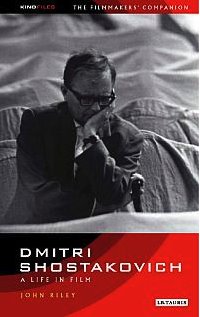
Wisely they’ve kept the disturbingly manic performance of Offenbach’s Can-can, also used by Shostakovich as a symbol of a corrupt regime in New Babylon. In fact Shostakovich pops up a couple more times: on the way to the Kremlin Kotov breaks into a tune that any Russian would recognise: The Song of the Counterplan, indissolubly linked to the 1930s and a tune to which Shostakovich returned more than once, as explained in this book. At the National, Kotov simply suggests singing some folk songs (a few bars wouldn’t have come amiss, though they’d have to pay Booseys!) And there’s a brief reference to the ever-popular Aviators' March ("We Were Born to Make Fairy Tales Come True"). Finally, I wonder if the film's fragment of Shostakovich’s Fourteenth String Quartet is a little Artemyevan joke: the quartet was dedicated to the cellist Sergei Shirinsky: Kotov’s first name is, of course, Sergei. But the staging dispenses with much of the music, making the texture a bit thinner.

Burnt by the Sun is an intensely patriotic piece: Mikhalkov-Kotov saves “the people’s wheat” and fights for the Motherland and defends the future he envisages for it. Whatever Bolshevism later became, he cleaves to its initial stated aims and the play, if anything, strengthens that, with Kotov more forcefully reminding us of his peasant beginnings and the cowardice of the bourgeoisie who ran before him rather than defending their beloved lifestyle. That also slightly changes the dynamic with the rest of the family as he more openly despises them for that.

But none of these changes reduce the power of the piece and, as I said, Flannery has made it work brilliantly for a Western audience.

Meanwhile, Mikhalkov is currently producing Burnt by the Sun 2, a blockbuster two-part epic. Part one is set to open on 9 May 2010, the 65th anniversary of Victory Day, and the film will then be expanded as a 12-part mini-series.

For this he has reanimated Kotov, Marusia and Mitya who all died or were reported dead in the first film! Mikhalkov's father Sergei, of course wrote the lyrics of the Soviet national anthem and reworked them for a new audience when Putin revived it, and Nikita’s actions sometimes bring him to the edge of being an apologist for a cult of personality. Hence a visit to the set from Vladimir Putin, with his newly imposed official view of Stalinism, might raise an eyebrow but the director assures us the film will denounce the tyrant.

Finally, a small plug for Birgit Beumers' excellent guide to the film, published by Tauris.

Wednesday, 4 March 2009

Psycho for Sale

One of the problems for students of film scores can simply be finding the materials: studios often owned not only the copyright, but also the scores and parts, so composers could neither reuse the musical material nor ensure that it was physically preserved. But actually the studios didn’t really care about this stuff: the score was recorded; unless they wanted to re-record the music as library tracks, the manuscript was useless. Hence occasional clearouts would see them skip hundreds of pages of – to them - valueless paper.

Of course, since then, the interest in film music has developed and there is a greater value to these things, though ironically Hollywood’s obsession with rights means that often the material, though it exists, is hardly more accessible.

Still, even in earlier days, things slipped through the system, increasingly as composers rose to prominence and were able to negotiate more favourable terms.

One such was Bernard Herrmann. Hence he included chunks of his scores to Jane Eyre and The Ghost and Mrs Muir in his opera Wuthering Heights. But he also held onto the material and various donations mean that the University of Santa Barbara has a handsome collection.

But not everything. Like any other piece of music, film scores go through various versions on their way to completion and so it is that Herrmann’s widow Norma has decided to sell the most significant collection of film music related material to come on the market for several years. It comes up at Bonhams on 24 March (lots 110-11, and 193-218), details, here.

The highlight is a full autograph score of the concert suite Psycho: a Narrative for Orchestra, and anyone who has 40 grand knocking around would be tempted. Though it's a fair copy, there are a few alterations but I'm not sure it's going to revolutionise our view of either the film score or the concert work. Still, a lovely thing to own, perhaps framed in the shower.

But there are also things like a typically blunt missive from Schonberg, thanking Herrmann for a broadcast performance of the Second Chamber Symphony, which he felt was good though it suffered from electrical interference (and CBS’s engineers who disliked his music, and “always distort by the mixtures the sound.”)


Amongst Herrmann’s other left-field interests was Joseph Raff (1822-82), and you can buy Herrmann’s marked up copy of the 5th Symphony (Lenore). This may have been preparatory to his self-financed recording with the LPO, which inspired an epic shirt-ironing session.

A particular bargain (it seems to me) is a collection of eighteen letters from Charles Ives, of whose music Herrmann was a regular promoter. Having said that, Bonhams’ wide-ranging £4-8,000 estimate implies that they’re not entirely sure what it might raise.

Finally, a reminder of Herrmann’s romantic roots comes from his numerous volumes of Alfred Stieglitz’s seminal Camera Work, filled with early 20th-century photography (another 30k to find!) Herrmann’s Anglophilia is nicely (though coincidentally) illustrated by Alvin Langdon Coburn’s The Bridge – London.