Thursday, 27 November 2008

Veljo Tormis

Veljo Tormis: Works for Men’s Voices

Toccata Classics. TOCC0073


The Soviet regime was always wary of nationalist feelings in the republics but, for Estonians, music was a buttress against Russification and Sovietisation. In the four years before gaining independence in 1991 more than a fifth of the population would regularly join the so-called Singing Revolution (laulev revolutsioon), defiantly congregating in the streets to perform forbidden songs.

By then Veljo Tormis had been composing for over thirty years, concentrating on choral music and creating monumental cycles as well as smaller one-off songs.

Tormis was born in 1930, the eldest son of a farmer who was musically active in the local church in Vigala, Estonia, At 12 he entered Tallinn Conservatory but two years later the Soviets arrived and stopped the too-religiously-inflected organ class, so Tormis transferred to choral conducting, though the lack of churches restricted opportunities there as well. In 1951 he moved to Moscow to study with Vissarion Shebalin – to whom no doubt I’ll return – graduating in 1956.

The Soviets attitude to the Republics was always ambivalent: on one hand encouraging nationalism but at the same time taking care that it should not grow too strong. Tormis’ interest in Estonian folk music had been supported by Shebalin and, supporting himself by teaching in Tallinn, he went on to study the music of Orff and, after a visit to Hungary in 1962, Kodaly.

This climaxed with his first great cycle, Estonian Calendar Songs (Eesti kalendrilaulud) for mixed chorus (1967) and by 1969 was able to support himself, composing film scores, an opera and, overwhelmingly, choral music. Estonian national identity is closely bound to its choral traditions – amateur singing is endemic - hence Tormis’ importance and popularity.

Tormis himself said it best in setting the exiled Gustav Suits’ poem I’d Like to Sing a Song (Ühte laulu tahaks laulda)

I’d like to sing a song,
Just this only one:
That would rise a huge wave of sea
From the heart

You can hear (and buy) it here.

Titles like Bridges of Song (Laulusild) and Forgotten Peoples (Unustad rahvad) imply attempts to bind together misbegotten populations through music. The latter (formed of six sub-cycles) is particularly poignant as an epic memorial to endangered civilisations, such as the Izhorians and Votes. The Soviets responded by banning some of his works.

Tormis develops ancient Estonian regilaul, ‘runic’ songs, which might include imitations of natural sounds and something close to rhythmic speaking or shouting, with proto-minimalist rhythms. But Tormis avoids pared down Pärt-ishness: his musical roots are less religious than folk-pagan and very specifically Baltic-Finno-Ugrian: “It is not I who makes use of folk music: it is folk music that makes use of me.” As well as settings of modern Estonian poets, there are spells and incantations from the Finnish national epic, the Kalevala, and the Estonian equivalent, the Kalevipoeg.

Tormis creates a vast range of colours and textures and a huge dynamic range: the epic Curse Upon Iron (Ruaa needmine) is the highlight of the disc, running the gamut from whispering to shouting, by way of uncanny choral glissandos. You’ll have to turn up the volume for the quiet bits, but prepare to be blasted out of your chair a few minutes later. The Bishop and the Pagan (Piispa ja pakana) sets chant-like sections against, freer, more irregular music to tell both sides of the story of a 12th-century British missionary martyr. Beside these 10-minute mini-epics are catchy, witty and thrilling little pieces like An Aboriginal Song (Pärimaalase lauluke) and Incantation for a Stormy Sea (Incantatio maris aestuosi).

Tormis’ music is simultaneously ancient and newly minted, and the Svanholm Singers under Sofia Söderberg Eberhard hurl themselves into it with fantastic gusto. Tormis himself joins in, playing the shaman drum in two songs and the anvil in another, while counter-tenor Stefan Engström also does a turn on log drums. Along with some whistling, these sounds make the disc even more atmospheric.

Tormis isn’t a new name (for those in the know) but, though there have been several CDs of his music, he isn’t as widely known as his compatriot Pärt. Toccata Classics’ excellent selection, including premieres of a couple of revised pieces, is a welcome push in that direction.

Fans of choral music, and anyone with a taste for Kodaly, Orff (the insistent Musica Poetica from his Schulwerk was used in Malick’s film Badlands) or Bartók’s Mikrokosmos shouldn’t wait.

Friday, 21 November 2008

Shameless self promotion

Just in time for Christmas, I thought I'd point to a few things that I've been up to (relatively) recently.

A heads-up on the arrival of my book Discover Film Music from Naxos. It comes with two 78-minute plus CDs, with examples of everything from Steiner's King Kong (1933) to ... errr .... Ifukube's Godzilla. Actually there's a disc of Hollywood music from the aforementioned ape to Spider-Man, and another covering composers from or working in Britain, Sweden, the USSR, Italy, Switzerland, France, Japan, Belgium and Poland. Not the whole of the rest of the world, I realise, but there was a word-count! Finally, there's a timeline (highlighting selected Oscar-winners and literary adaptations with notable scores) and a glossary. There's a description on the Naxos site and you can buy it from all the usual outlets. If you need any more persuading, there's a review here though you might have to scroll down a bit to get to it.

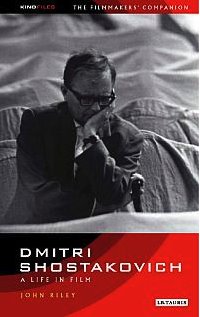
I should also point out a few other recent arrivals, all Shostakovich-related. A couple of (quite different) round ups of his cinema career that I've written appear in two symposia.

With 640 pages, Michael Mishra's A Shostakovich Companion from Praeger Publishers should keep everyone who has a sturdy enough bedside table entertained for a good while. There's a full description and a list of contents here. In brief, the first half is taken up by Michael's look at how Shostakovich's music was received through and after his life (thankfully, a section not hijacked by Testimony discussions), and an analytical biography. Then there's a series of essays (including a return appearance from the editor!) analysing aspects of selected works. Approaches range from the musicological (his passacaglias) to the more literary (his dramatic impulse seen through the two operas). Finally a trio of articles look at his pianism, his legacy as seen through his students, both official and unofficial, and, courtesy of yours truly, his cinema work.

With a cover price of £95 it might be something that you'd want in your Christmas stocking (though one kindly soul is selling a second-hand copy on Amazon for only £94.99!) Whilst the cover might not be as striking as some others, I've included it simply because I've done it for everyone else and I'm nothing if not fair.

If you're harder pressed (and happy to take a shorter essay from me - though who would want to do that?) you could shell out about half as much for Pauline Fairclough and David Fanning's Cambridge Companion to Shostakovich (details here). Where the analyses in Mishra's book often look in great detail at particular works, this takes in entire genres (though with chapters on the First Symphony and the Second Piano Sonata). It begins with musicological workouts for the symphonies and string quartets before wandering further afield. The ballet, film and theatre music is set in the context of Shostakovich's life and the political turmoil in which he was unfortunate enough to live. This approach has the advantage of including some usually overlooked pieces, like The Song of the Forests, a work better than its 'inspiration' (Stalin's reforestation scheme) might imply.

Just to reassure everyone that my contributions to these two books are different, and different again from my full-length book. Indeed, if I ever got the chance to do a second edition, I'd definitely include some of my subsequent observations from these essays as well as my ongoing research.

Finally, a more specific essay Keeping the Icons on the Wall: Shostakovich's Cinema and Concert Music appears in the trilingual (English, Russian and Italian) Dmitrij D. Šostakovic (1906-1975). Tra musica, letteratura e cinema (there's also a pdf with a little more info). I look at some of the revolutionary songs and other pieces that Shostakovich quoted in various works and see how their repetitiveness, in conjunction with the films' cinematic style, could echo the effect of religious icons, enhancing the propaganda while turning music critics off. This book's a bit harder to track down, but you can buy it direct from the publishers Leo Olschki and there's also a list of overseas sellers on the site.

Sadly, I don't get any extra money should you decide to indulge in these tomes (and I selflessly urge you to do so), but I do get a nice warm glow from knowing that I've satisfied you!

Saturday, 25 October 2008

Korean Film Festival

The Korean Film Festival at the Barbican looks promising, if only on the strength of the two films that I've already seen.

Kim Ji-Woon's The Good, the Bad, the Weird (Joh-un nom, nappun nom, isanghan nom) is a massively enjoyable mash-up of Leone (the title, credit sequence and train-bound opening scene are explicit nods), Kurosawa and Hong Kong wire-work with some bizarre comedy thrown in. The market gunfight with the diving helmet (you have to see it) is hilarious, while the climactic single-handed decimation of the Japanese army as they gallop through the Manchurian desert is weirdly life-affirming in its pure energising enthusiasm. The delirious, almost relentless alternation of chase-fight-chase-fight hardly lets up and the 139 minutes fly by as quickly and as enjoyably as any Keaton film. There are a few nods to 1930s Sino-Japanese relations but if you're looking for a history lesson, this isn't it.

There are a couple of screenings at the London Film Festival but the Barbican has managed to persuade the director along to do a post-film screen-talk.


Utterly different is Lee Chang-dong's Secret Sunshine (Milyang). The quiet story of a woman struggling to start a new life after the death of her husband is utterly gripping and filled with tiny but resonating signs of her recovery. Jeon Do-yeon is on screen practically constantly and deservedly won Cannes' best actress award. 

Wednesday, 22 October 2008

The Silence Before Bach

A quick heads up for a great film in the LFF: The Silence Before Bach (Die Stille vor Bach). Sadly, as so often with the avant-garde stuff in the fest it is allegedly sold out (a single show on Thurs 23 Oct at 4pm in NFT2) but if you're in the area it's definitely worth dropping in to see if there's a chance of getting in. Information here.

I'll be writing more on it in due course.

Rock Monologue (Рок Монолог)

“Rock music caught me on the head when I was sixteen and it never let go.”

Russia has a huge ‘bardic’ tradition, with a sub-strand of singers who fearlessly speak against authority on behalf of the people.

Ideally they should be careless of material success; difficult to the point of eccentricity; widely known but paradoxically impoverished, and forced to work underground, using guile to get their message across: a message that is universally understood and yet tolerated by the authorities that it criticises.

Pushkin (and, after him, Musorgsky) put one at the centre of Boris Godunov: the yurodivy, the ‘holy fool’ who refuses the Tsar grace and accuses him of murdering his way to the top, but who nevertheless enjoys his protection.

In later times rock musicians began to take on some aspects of the role, one of the most famous (in Russia) being Yuri Morozov (1948-2006) a composer/multi-instrumentalist/producer/sound-engineer.

Pop and rock, like jazz, were strange beasts in the USSR. While they were so popular they demanded some official recognition, their Western influence had to be curbed. Hence they became charged with a meaning even beyond that in the West. Imagine Elvis being put in a mental asylum on the basis that his music is …. well …. anybody who’s sane can hear that it’s just wrong, can't they?

Rock Monologue, Vladimir Kozlov’s portrait of Morozov, attempts to tell something of his life, concentrating on his struggle. Unfortunately Morozov died during filming, so his interviews are framed by friends’ posthumous thoughts, supplemented by Gennadi Zaitsev’s archive film.

But it starts with the regulation counterpoint of official Soviet events (Red Square parades et al) with Morozov’s darker songs about dreams (a recurring theme in his work), dissatisfaction, and how everyday smells and noises block out everything of value. In Zaitsev’s home movies Morozov and his friends horse around, as they occasionally fled the city to the dacha, trying out different personae, dressing up in costumes (or wearing nothing at all) and prancing around the forest, filming and photographing each other.

Back home, he filled his flat with a Heath-Robinson recording set-up or used downtime in the studio to record his music, often multi-tracking himself. Since using state equipment for personal profit was illegal, he embarked on a cat-and-mouse game with the authorities, duping them by duping his songs: repeatedly cross-recording them, so the KGB wouldn’t believe that such poor quality could come from professional equipment. Alvin Lucier’s greatest hit, I Am Sitting in a Room, uses the same technique to brilliant, if very different, effect.

As for the actual music, Morozov drew on heavy metal, prog rock, psychedelia, jazz, musique concrète, '80s synth-pop, Russian folk music and anything else that came to hand, pushing it through tape effects and weird concoctions of string-and-sellotape synthesisers. A couple of album covers give some sense of the range: the Genesis-surrealist Jimi Hendrix's Cherry Garden (1973), and the near Ultravox-ish The Exposed Feeling of Absence (2005! - obviously being fashionable was not high on Morozov's list of priorities).


Oddly, for all this experimentalism and official disdain, Morozov was immensely popular. Given the number of his albums in circulation he should have been a multimillionaire, as they were widely (if secretly) circulated: apparently most of the Soviet submarine fleet had copies.

Outside Russia Morozov’s music is still pretty difficult to track down – though the web, a sort of latter-day magnitizdat (the audio equivalent of samizdat) has come to his aid. I’ve found a few mp3s to link to (there are others), though with around sixty albums to his name, plus production credits for a host of other bands including DDT, Akvarium and Chizh and Co, it’s hard to feel that anything but a substantial chunk would only be a snapshot.

Though the 1977 song Dream (Сон) starts as a fairly inconsequential bit of sub-Deep Purple, the guitar solo briefly branches into something a bit weird before it pulls itself back together. The song’s title is rather more romantic than that of the album from which it’s taken: The Cretins’ Wedding (Свадьба кретинов).

The title track from the album Странник Голубой звезды (Blue-Star Wanderer, 1980-81) begins like a cheapo-synth folk song, but finishes off with a weird theremin-ish fluttering.

Weirdest of all is the title track from the 1981 album The Legend of May (Легенда о Майя). Obviously a post-Day-in-the-Life/Dark-Side-of-the-Moon production, it leaves them in the dust for sheer unsettlingness, with its Dada-esque combination of pretty much anything, including karaoke-ing over the Beatles.


You can download five more (equally strange) songs from The Cretins’ Wedding here. Sadly the titles came out (for me) as a series of question marks so you may need to identify them from my descriptions.

The title track is pierced by a series of almost blindingly bright guitar chords, while the middle section features a Cale-ishly moaning violin.

Я смеюсь над часами (I Mock the Hours)
The slow-mo guiro under the flowers-in-your-hair folk-pop at the start is slightly disconcerting but when something more akin to industrial noise breaks in…

The relentlessly bleak Черный пес (Black Cur) combines massively over-fuzzed guitar and detuned pub piano under a throat-mangling vocal line. The end of the song gets even stranger…

The relatively ‘normal’ Кретин (Cretin) features Morozov’s sneering over a heavy metal riff, to make one of the less sonically-interesting tracks here, though they lyrics (“I feel the stars: they are as slippery as human brains”) are typically dark and poetic.

Конформист (The Conformist). Again, after the intro’s wailing electronic would-be violin, the surface initially seems, well, conformist, despite the lyric (“In muddy waters, swim flowers and rubbish”) but soon the background stuff starts to break through and various strange noises leap from speaker to speaker.

It’s quite obvious that Morozov needs some serious advocacy in the West. Kozlov’s documentary is a start and it would be good to see more screenings following on from the one at the recent Russian Film Festival. But unfortunately it concentrates on Morozov’s more conservative output. That’s odd given that it also stresses his ‘outsider’ status, admitting that he was difficult to work with: more than once he denied the existence of his wife and his increasing religiosity may have caused some problems. But he inspired adoration from some of those who worked with him. He himself excoriates the compromises of Dylan (his honorary PhD), and McCartney for his knighthood (“that’s got nothing to do with music.”) Lennon was his hero, though there’s a feeling that it’s as much for his political statements as anything on his late-60s avant-garde albums. But for a Soviet artist the two sometimes became intertwined.

In the meantime, here are the first few few minutes from Rock Monologue (in Russian, subtitled in French):

Thursday, 25 September 2008

Quantum of Solace

Jack White is apparently dismayed that his song for the new Bond film has been used to advertise Coke rather than being reserved for the film world's largest product-placement fest.

In other news, it's sad that Amy Winehouse's effort was dropped. Bravely, perhaps, she wrote the lyrics as a sonnet, but subversively divided it into a quatrain, a quintrain and triplet, before finishing with the tradition final couplet. However, her great coup was what can only be described as a singular rhyme scheme. I have it on very good authority that the lyrics were not:

It's a quantum of solace:
From the Hill of Dollis
Being chased by the polis
With their pack of collies.
A Bolivian bloke called Gonzales
But not being played by Telly Savalas
(actually it's Peter Sallis)
We thought about Miriam Margolyes
But, we realised, she'd have to go bra-less.
Concerning international hauliers,
The story’s desperate and lawless,
The sub-plot’s from Die Verwirrungen des Zöglings Törleß.
I admit, the song's not flawless
If you can do better, call us!

Friday, 19 September 2008

Live and Remember (Живи и помни)


The Russian Film Festival opened with Alexander Proshkin’s award-winning Live and Remember, based on the novel by Valentin Rasputin.

Rasputin was born in 1937 in Irkutsk, Siberia, and was a journalist before publishing his first fiction in 1961. He’s associated with ‘country prose’, a genre that began during the Thaw and was characterised by Chekhovian understatedness and slice-of-life stories. Though popular and officially praised (Live and Remember won a State Prize) it presented a sceptical view of modern life and industrialisation, though others felt it was a romanticised Russophilia.

His 1976 story Farewell to Matyora was the basis of the best, and best-known of several film adaptations, though when director Larisa Shepitko was killed in a car crash in 1979 her husband Elem Klimov completed it in 1983. Based on Rasputin’s own childhood, it tells how a village resists the flooding of their valley for the Bratsk hydro-electric dam.* In 1965 the project had inspired a very different artistic response in Yevtushenko’s panoramic epic poem. They, in turn, were different from creatives’ views of the Dnieper dam: Esfir Shub’s K-Sh-E: the Komsomol is the Patron of Electricity (1932) or Fyodor Gladkov’s novel Energy, which, written between 1932 and 1938, was actually in production for longer than the dam itself!

SPOILER ALERT!
Siberia during the war. While most of the men are away fighting, the women work as loggers, to supply the wood vital for the war effort. When Nastya's soldier-husband, Andrei is stationed near the village, he takes the opportunity to go AWOL. As a deserter, he can't go to the village, so he lives in the woods and Nastya brings occasional supplies, while there are various attempts to find him. Ironically, after four years of childless marriage, she falls pregnant. Andrei sees it as a blessing and insists she bears it but Nastya doesn’t know what to do: unable to reveal that it is Andrei's, she claims it was a passing Red Army Commissar. The village is divided, some, including her mother-in-law, condemning her and some more sympathetic, but when suspicions grow (perhaps fuelled by Andrei's father) she sticks to her story. The war ends but Andrei still doesn't reveal himself. A search party is sent out and Nastya, hoping to warn him, sets off across the lake at night. One of her oars breaks and, realising that she may in fact be leading them to him, she jumps into the lake. At a commemorative meal, Andrei is condemned, though there is an irony when one of Nastya's friends agrees that "he is in hell", while Nastya is elevated to a 'saint'. A tug-boat sails down the river, broadcasting the Red Square victory parade and when the captain sees but doesn't recognise the unresponsive Andrei, he shouts: "Are you alive?"


Throughout Live and Remember, there’s a constant feeling of the hardness of life: the opening scenes riff on shots of and discussions about axes - vital to life in this harsh landscape. When Andrei steals a calf, there’s a montage of their eyes – beseeching? apologetic? hopeless? - before he brings down the axe.

Alexander and Gennadi Karyuk’s wintry cinematography (underlined by constant, snow-squeaking shoes) is slightly warmed by Roman Dormindoshin’s music which, though often gently minimalist, occasionally rises to muted melody.

Though Rasputin (like many writers) tends not to enjoy adaptations of his work, the appropriately named Dariya Moroz, who plays Nastya, helped kick-start the film after starring in a stage production. Book-ended by the actors playing an old Siberian game, that was dropped for the film and a new coda written. Predictably he though the film was OK but disliked the changes.

Playing Andrei, Mikhail Evlanov is something of a feature in the festival. To judge from this and his other roles, he obviously enjoys make-up and in Live and Remember he is gradually transformed from merely unkempt to being a kind of wild-man. Disillusioned, he destroys his medals and attempts suicide, in contrast with the village’s returning hero, Maxim Vologzhin.

Though there might initially be a whiff of The Return of Martin Guerre, we’re soon reassured that Andrei is indeed who he claims, but Nastya’s reminiscences of their happy marriage are brutally cut short by Andrei’s ruthless self-assessment as a wife-beater and a deserter: a double-criminal.

Counterpointing the two younger leads is veteran Sergei Makovetsky as Andrei's hyper-intense father, cannily putting together the clues about Andrei, but struggling to do the best for both his son and the village. His age and gammy leg explain why he isn’t at the front, highlighting suspicions about the young village leader, a drunken bully ironically named Nestor. Several smaller parts are taken by non-professionals. Presumably they were brought in from Irkutsk (it was actually shot around Nizhny Novgorod) to help with the peculiar local accent, which caused the Russian actors (and some Russian audiences) a bit of trouble. Following on from Rasputin, Proshkin and Moroz both wanted to contrast rural and urban outlooks: four country people, practicality – like Nastya binging food to Andrei – is a stronger expression of love than for urbanites.

Unsurprisingly, Live and Remember is a bit reminiscent of Farewell – the overwhelmingly female cast facing intense difficulties, and, in its whiteness and moral contemplations, Shepitko’s The Ascent (1976): the title is a grim reminder of Andrei’s fate, to live on and be tormented by his memories. It also has the sensitivity to rural life that Proshkin showed in The Cold Summer of ’53 (1987). But it’s its own film, and, if it isn’t quite Farewell’s equal, it's certainly an outstanding achievement. Sadly, it was given a fairly limited release in Russia (though it was well-received) but, hopefully, success on the festival circuit will help its profile, while it's also been released on DVD.

* Given the project’s birth pangs, it’s ironic that the name derives from the Russian for ‘Brother’

Live and Remember (Живи и помни; Zhivi i pomni, 2008)
Farewell to Matyora (Прощание с Матёрой; Proshchai s Matyoroi, 1983)
K-Sh-E: the Komsomol is the Patron of Electricity (КШЭ: Комсомол – шеф электрификации; Komsomol – shef elektrifikatsii, 1932)
The Ascent (Восхождение; Voskozhdenie, 1976)
The Cold Summer of ’53 (Холодное лето пятьдесят третьего; Kholodnoe leto piatdesiat tretevo, 1987)