The launch of the London Film Festival. Obviously it's going to take a while to plough through the programme to decide what's worth seeing, but a few things caught my eye.
Of course there are the galas, though they're films that will be opening anyway. Frost/Nixon looks interesting but Oliver Stone's George Bush biopic W had several people wondering whether it was going to be a knockabout comedy. There was certainly enough laughter at the launch.
There was an audible intake of breath at the words Quantum of Solace (chops to Eon for refusing to back down in the face of a hail of criticism at the name (though much more ridiculous and it would have turned into a Star Wars title). Most amusing, however, is this note: "As this will be the first public screening of Quantum of Solace anywhere in the world, patrons are advised that special security measures will be in place." Noticeably, such measures won't be in place for Waltz With Bashir, not, as I thought, a portrait of the Di-bothering journalist, but an incendiary-sounding animated autobiographical doc about the Middle East conflict.
Whether or not it's the skill of the trailer-maker, Woody Allen's Vicky Cristina Barcelonadidn't seem as bad as rumours have had it. Of course, its acreage of pulchritudineity may prove to be an embarrassment.
The worthiness quotient will be kept high by (artist) Steve McQueen's almost dialogue-free Hunger and Soderbergh's 252-minute Che.
Entre les murs (The Class) looked really promising and Easy Virtue looked like it could be avoid the ever-present danger of squirm-inducing "we're-British-but-we-can-laugh-at-ourselves" 'comedy'.
I bumped into Mr Squares of Wheat the other night at the NFT .... errrr .... BFI South Bank, and he quite rightly berated me for not blogging often enough. So here's another blurt of multiple posts.
Anyway, we were both looking forward to the Len Lye event.
It's fantastic to think that seventy years ago there was an organisation that supported artists who wanted to make avant-garde films, often giving them pretty much carte blanche to do what they wanted, with the proviso that the last few seconds should include a 'message'. This astonishingly enlightened organisation was none other than the GPO (aka The Royal Mail, aka Consignia, aka The Royal Mail).
One of my more pleasant jobs was at the BUFVC, helping put the GPO collection online for educational use. The encodings are lovely and the metadata great, but, sadly, you'll need an Athens account to see them. Alternatively they are available on DVD from Panamint Cinema and the BFI are about to launch a series of restorations.
What would British film be without the GPO Film Unit? Not to list everyone is invidious, but it's hard to ignore the poetry of Humphrey Jennings and Alberto Cavalcanti, the very English surrealism of Richard Massingham and the explosive energy of Lye and Norman McLaren. Apologies for reducing these geniuses to single, only partially representative adjectives, and for omitting any of your favourites. Sit tight: I'll be returning to them.
But, back to NFT2. New Zealander Lye gave his work to the Len Lye Foundation and much of it is held at the Govett-Brewster Art Gallery. It ranged over painting, kinetic sculpture, poetry, and of course film, and Tyler Cann, curator of the collection ran through Lye's life and work, neatly showing its common well-springs in modernism, aboriginal art and Freud.
Then there was a screening of Lye's first film Tusalava (1929). Amusingly, the BBFC were agitated by the suspicion that it might be about sex. And if you insist on films being 'about' something, it's hard to deny, but you'd have to worry about anyone who found it arousing! The title is Samoan for 'just the same' or 'everything comes full circle' and if it's more than a film about movement per se, it's a modernist take on Maori art and photomicrography, a meditation on creation, struggle and destruction, all carried out at cellular level. Maybe it's just me, but there was also a weird Frankensteinian aspect to it!
At its Film Society premiere it was accompanied live by Jack Ellit's two-piano score, though this is now lost. Ellit scored and 'synchronised' seven of Lye's eight films up to Trade Tattoo in 1937, which may - or may not - give us a clue as to what Tusalava sounded like: his contributions included using Don Baretto and His Cuban Orchestra, and chunks of Holst's The Planets. For the NFT screening Alcyona semi-improvised appropriately organic and swirling music on one piano. Given the film's slow and smooth development, it was an achievement to insert some points of noticeable change, that were not merely tacked on.
Various people have put it on Youtube with their own soundtracks. Two of them are a bit Eraserhead-ish and there's a jazz score that doesn't really have much to do with the film but as far as I can tell (sadly, despite being in two parts, it doesn't play very well) it gets a bit better as it progresses. There's also a self-declared "avant-garde sound design" that's not bad, though it sometimes follows the action a bit too closely for my taste.
They all have different running times (I haven't done an exhaustive comparison of the whys and wherefores) and, weirdly, the first three have somehow found a copy of the film that is left-right inverted. A couple of them have the Film Society leader.
For my money, the best score is this.
Some of Lye's best-known films are Trade Tattoo, Rainbow Dance and A Colour Box. For these astonishing films Lye used heavily treated found footage, drew and painted directly onto the film, stenciled texts onto it and scratched the surface to create an electrifying result. Seeing these films, you can't help but whoop with joy.
The Royal Mail should simply show the genius Trade Tattoo every November. It would cheer up the entire country and they could use the saved advertising budget to keep a few post offices open.
Of course, Lye's films should be seen in their full glory (the web can't do them justice) and I'm looking forward to the BFI DVDs but in the meantime, enjoy Trade Tattoo. Frequently.
Cassandras would claim that classical music and television have been falling out of love in recent years and sometimes it's hard to disagree. This year's BBC Young Musician of the Year was marked by an almost complete absence of ... errrrrr... music. Instead we were treated to hours of the competitors hooking up on Facebook in between embarrassedly small snippets of the actual music. But never mind - you could see the entire performances on the web, so that fulfilled the public service requirement.
So, mine was one of the many hearts that sank at the prospect of eight 'celebrities' (from C down to about Y) in an X-Factor knockout competition to conduct the BBC Concert Orchestra at the Proms in the Park. In a nod to Marxist dialectics, the candidates ranged from untrained music-lovers, through classically-trained non-musicians, through to untrained professionals, so part of the idea seemed to be to have a kind of nature-versus-nurture debate.
Actually it wasn't bad at all.
Conducting is a mysterious and invisible art and some people, in thrall to egos like Karajan and Solti (affectionately known by London players as The Screaming Skull), think the conductor just sort of windmills around a bit, vaguely in time to the music.
It's one of those things that is best demonstrated by going hideously pear-shaped. I well remember some appalling last-minute-replacement hack managing to turn Berg's Violin Concerto into something resembling Berg's Trombone Concerto.
Maestro's band was under instructions to do whatever they were told, which goes somewhat against some orchestras' natural instincts. If they take against you, you're dead: being at the head of an out-of-control orchestra must be one of the most terrifying experiences you could have.
So it was nice to see the mechanics being explained, including getting the arms to work independently by simultaneously and repeatedly drawing a triangle and a square (counting three in one arm and four in the other) - a ramped-up version of patting your head and rubbing your stomach.
When it came to getting to grips with the dots on the page, were the untrained at a disadvantage? The assigned pieces (the prelude to Bizet's Carmen; Grieg's In the Hall of the Mountain King; Prokofiev's Montagues and Capulets, and a filleted Blue Danube) were all under about five minutes and, since there was no tricky Rite-of-Spring counting, after some hard slog they could be learnt by heart.
Amusingly, the untrained Goldie quickly sketched the sort of diagram he uses to convey his ideas to his collaborators, and it was absolutely in the tradition of 1960s graphic scores that arch-exponent Cathy Berberian affectionately mocked in Stripsody, where the performer is inspired to make appropriate noises by a series of cartoons.
But back to the maestri. Clips from the final concert are here.
Had windmilling been item one on the job description Peter Snow would have been a shoo-in but it was painfully clear almost from the beginning of the programme that he'd be going for an early bath. He was further disturbed by his insistence on using the score (beating time, molding the sound of the orchestra and turning the pages proved too much) though it wasn't as bad the audience's hilarity would have you believe.
The other nominee for eviction was the man universally known as Blur's Alex James who, as you may have heard, in between television and radio appearances and newspaper articles, runs a cheese farm. A former professional musician clinging on by the skin of his teeth, one felt his pain - though only momentarily. He didn't so much conduct the middle section of the Carmen, as wave his arms in an ... errr ... ecstatic(?) Ibiza moment. Also, it's embarrassing not to be able to count without moving your lips.
Of the others:
David Soul's post-Hutch pop career climaxed with Jerry Springer: the Opera. Soul plays guitar (often, though not in this case, a sign of innate musical inability), but sadly, he's simply not in control of things. Closer to following the band than leading it.
Despite having mastered the piano to Grade 8, Sue Perkins beats time simultaneously with both arms, like Marcel Marceau tossing a giant salad. Apart from being twice as much work as necessary, it stymies any possibility of doing anything else with the music. Having said that, she's progressing well with the conductor-ish gurning, if occasionally there's a look of surprised pleasure that what she wanted to happen actually came to pass. Nevertheless, unless she can loosen up, she's for the chop.
Katie Derham is possibly someone else for whom a little knowledge will be a dangerous thing. The pianist-violinist-newsreader-Classic-FM-presenter (favourite piece: Rhapsody in Blue) has doubtless spent many happy hours conducting the Berlin Philharmonic in the comfort of her own living room. But then again, haven't we all? Though my preference is for the USSR Ministry of Culture Symphony Orchestra. She was obviously trying to inject a bit of interpretation (a bit of rubato, etc) but is still too concerned with doing it 'right'.
Actor-comedian-entertainer Bradley Walsh is determined not to be bested, no matter how much he seems to play the clown. Obviously taking it far more seriously than he's letting on (it's on his website), he could well come up on the inside.
On the strength of episode 1, the finale will be between Goldie (an inspired natural, with minimal 'technique') and Jane Asher (a ruthless perfectionist, and a redheaded cake-maker to boot).
Anyone who's passing through Paris before the end of August would be well-advised to swing by the Cinémathèque Française, where there's an excellent Georges Méliès exhibition.
The title, Méliès le magicien says what it's all about: linking Méliès' cinema work to his previous incarnation as a magician and performer.
Having bought a theatre from the illusionist Robert-Houdin, Méliès set about creating a series of magic tricks and the exhibition includes various pieces of stage apparatus and costumes. From there is was a short step to the new magic of the cinématographe. Méliès really was a polymath as is shown by some of his exquisite designs (here's the moon-landing from his famous Voyage dans la lune (1902).
Combining the techniques of the black theatre with cinema's superimposition and the tricks of editing enabled Méliès to achieve some fantastically sophisticated special effects, while a model of his studio at Montreuil, gives an idea how he used perspective tricks to achieve some of his grandest effects.
Fantastic in both senses of the word, his films often feature devils (the very beautiful Les 400 farces du diable ~ 400 Tricks of the Devil (1906) or other mythical creatures (La sirène ~ The Mermaid, 1904), while dismemberment is a regular occurrence.
Unsuprisingly, I was intrigued by Le Mélomane (aka The Music Lover, 1902) in which people are decapitated and theirs heads are strung across the five wires of a telegraph line to make a couple of bars of music. As Méliès was based in the US at the time, the melody turns out to be a snippet of God Save America, (or, for Royalists on my side of the pond) God Save the King.
In the depths of the Cold War Solzhenitsyn became one of the West's favourite Soviet writers. The Gulag Archipelago, his epic dissection of the prison-camp system confirmed everything that we 'knew' about the USSR, while the treatment he received at the hands of the regime only deepened that knowledge.
Without denying Solzhenitsyn's greatness as a writer, we can recognise that his reputation was emblematic of the mirror image outlooks of West and East, shackling artistic worth to 'dissidence' and 'conformity'.
In 1945 Alexander Isayevich Solzhenitsyn was a twice-decorated Red Army officer when a letter obliquely criticising Stalin was intercepted. He was imprisoned for eight years, followed by three years' internal exile.
Solzhenitsyn continued to write in secret but it was Khrushchev's 1961 speech denouncing Stalin's cult of personality that emboldened him to submit One Day in the Life of Ivan Denisovich to Novyi Mir.
Based on his own experiences, the fictionalised account of camp life is, at the end, quite optimistic, showing the importance of fortitude and small victories - the hero had enjoyed that day's work, managed to get an extra ration of kasha, and found a piece of hacksaw blade (with no immediate purpose but the thought that it could come in useful). But more than that, it shows that the regime, no matter how brutal, could not guarantee to reduce people to its level. Published at Khrushchev's express command, it made Solzhenitsyn an overnight literary sensation, though almost immediately he also attracted some now largely forgotten criticism, not least from the First Secretary of the Moscow Communist Party.
A few stories appeared while he worked on the novel Cancer Ward but, though it was typeset, it was pulled before publication. Nothing new appeared in the Soviet Union after 1965.
He continued to write through the inevitable campaign of harassment, while living at the dacha of husband-and-wife cellist and soprano Rostropovich and Vishnevskaya. In 1969 Solzhenitsyn was thrown out of the Writers' Union, and the following year won the Nobel Prize. As the attacks continued Union, whereupon his hosts wrote a defence, though it went unpublished and contributed to their own fall from grace. When The Gulag Archipelago appeared in Paris in 1974, he was deported, and settled in Vermont.
For the West, this was a coup: a noble dissident, from whose eyes the scales had fallen, uncowed by the shameful treatment at the hands of an irrational tyrant.
But Solzhenitsyn soon disabused them of the idea that he would be grateful for their refuge. What the West saw as anti-Soviet was nearer to pro-Russist, and he had equally little time for the decadent West. Withdrawing to the snowy woods, his ongoing fiction was interspersed with jeremiads on how Western freedom had descended into decadence, most notably in a 1978 address at Harvard.
With the collapse of the Soviet Union he was rehabilitated, his work was finally authorised and he returned to the country that was, to misquote Stalin, "dizzy with failure."
He quickly came to hate the legalised pillage of Gorbachev and Yeltsin's perestroika, and it became clear that he would settle no more easily in Russia than he did in Vermont.
In Rebuilding Russia (1990) he argued that Russia, Ukraine and Belarus should reform as a bastion of (anti-Western-atheist) Christianity. Unsurprisingly, he opposed Ukrainian independence, though they probably took a dim view of this 'support' as he also denied that the Holodomor - the 1932-3 Ukrainian famine - was an act of genocide, denouncing those who proposed as much. Semantically he has a point. Despite the similar sound, the Holodomor ('murder by hunger') was not a Holocaust, a planned attempt to exterminate the Ukrainian nation. Rather it was a shameful exploitation - even exacerbation - of a natural tragedy. Of course, the Soviets used the same 'not-only-Jews-were-killed' logic-chopping to persuade Yevtushenko to alter Babi Yar. Still, at least Solzhenitsyn wasn't following Stalinist fellow-travellers like the New York Times' Walter Duranty in denying that it happened at all.
In 1936 Solzhenitsyn had planned an epic on the Revolution, though it was only in 1969 that he began The Red Wheel with August 1914. He revised it in 1984 before, over the next nine years, adding three more volumes to bring the story up to April 1917. It's fascinating to think what it would be like had he written it when it was conceived. Although he held out against Party membership, became disenchanted with Stalin, and later saw the Revolution as a schismatic moment when the Bolshviks severed 'Russia' from its roots, pre-Purge he was in contact with conformist writers including Konstantin Fedin. Ironically, it was Fedin who prevented the publication of Cancer Ward.
After some doubts, Solzhenitsyn became a supporter of Vladimir Putin and praised the country's new robust foreign policy, forgetting some of its new illiberalities. In return he was rewarded with the state prize. In his acceptance speech he said that memories of the Soviet period would "forewarn and protect us from destructive breakdown."
Ironically in his 1970 open letter defending Solzhenitsyn, Rostropovich cited the notorious 1948 Musicians' Conference: "Can it really be that the times we have lived through have not taught us to take a more cautious attitude toward crushing talented people?"
Perhaps there'll never be 6,000 people ready to fill the RAH for two-and-a-bit hours of Stockhausen, but those who didn't go missed a real event. I don't know how it came over on the radio but it's not really something I can imagine in anything other than the flesh.
From the 1950s onwards Stockhausen was an undeniable leader of the avant-garde - his pupils and assistants form a roll-call of modern composers in a surprising variety of styles. But then, in the 1960s he began also to influence popular music, and famously appeared wedged between Lenny Bruce and WC Fields on the cover of Sgt Pepper (back row, fifth from the left). Frank Zappa, Pink Floyd and Bjork are among his admirers.
In 1977 he began a quarter of a century of work on his seven-day opera-cycle Licht, for which he envisaged a new concert hall being built, but which also included the infamous string quartet in which the four performers are linked only by headphones, as each plays in their own helicopter. Perhaps Prince Harry would like to sponsor a performance?
Where he saw such outlandish demands as simply necessary, a general mood-shift against avant-garde 'pretensions' saw a megalomanic attempt to out-Wagner Wagner. Stockhausen began increasingly to work with a group of close collaborators including Kathinka Pasveer and Bryan Wolf, who controlled the sound-projection in this Prom.
All this helped move him towards the apparent periphery. Or perhaps he was simply a victim of fashion and an embarrassment at his earnest honesty, to which art responded with post-modernist irony.
Probably he didn't help things with his claims to have been born on Sirius, though his website describes his death as his "ASCENSION through the HEAVEN'S DOOR into PARADISE", a slightly more conventional pantheistic-cum-Christian view of our fates.
But you can't fault his sense of mission. One of modern music's difficulties is that people hardly have a chance to hear it more than once - premieres are easy: it's the second performances and recordings that are elusive. But Stockhausen released his own series of (91 and counting) CDs, alongside scores, books and any amount of explanatory material.
And he seems to have retained his sense of humour.
But, back to the RAH...
Gruppen, Stockhausen's mid-1950s masterpiece employs three orchestras: half way through writing it, he realised that no single conductor could cope with the three independent but interlinked time layers, so he simply split the orchestra and demanded three conductors. For all its revolutionariness, nobody who's at home with Webern and Schönberg would need to stretch their ears very much, but the most exciting things is the hocketing of melodies (yes - it does have them!) and timbres around the three groups. I was a bit worried that the barn-like RAH would meld it all into a single mush or produce some other weird effect (I remember a Nielsen Fifth where the side-drummer's apocalyptic climax was literally doubled by an echo). Thankfully, at the back of the hall in the circle the three groups were clearly separated though it wasn't quite the surround-sound that Stockhausen intended. Part of the joy is trying (and knowing it's impossible) to imagine what it sounds like from other places: with two orchestras taking up a good chunk of the arena, I can imagine that standing between the marimba and the cellos (or whatever) would have been very strange.
After that, the lights were dimmed for Cosmic Pulses, an electronic piece from the thirteenth hour of Klang, a series to be played over a 24-hour period. Like anything by Stockhausen, there's a rigorous plan (permutations of pitches, rhythms and spacial placement) but, on a first hearing (this was the UK premiere), that seemed less important than simply enjoying the sounds bouncing around the hall. At 32 minutes, perhaps it was a bit too much of a good thing but still recognisably way beyond a lot of electronic music's "...and-I-can-do-this-as-well..." noodlings.
Klang's fifth hour is marked by Harmonien for amplified and sound-projected solo trumpet. This incredible virtuoso piece didn't stay a moment too long as Marco Blaauw juggled a belt-load of mutes to create a completely gripping 15 minutes.
The second half began with another classic: Kontakte, for electronic sounds, piano and percussion. There's not much to say, except to exhort people to hear it, but again, the live experience is something different as we watched the interplay of Colin Currie on percussion and Nicolas Hodges, credited only as pianist but who also did a share of the percussing.
We'd taken the opportunity of a thinly populated circle to slither round to the side, above the first orchestra, for a different perspective on the repeat of Gruppen. It certainly proved how different sound perspectives worked though it sounded better from the first position; the spacial effects weren't as strong from the side. Thankfully, the second outing wasn't spoiled as the first had been by a moronic show-off, intent on demonstrating that he knew this piece so well that he could start applauding even before the last note's dying fall.
Finally a hearty clap on the back for Martyn Brabbins, who replaced Ludovic Morlot to conduct Gruppen's second orchestra. Quite how one steps in at the last minute in a work like this is beyond me!
Over the next few weeks I'll be back in the blogging saddle and will be leavening the new stuff with a dig into the archives.
With that in mind, here's a belated obit of the Polish cinematographer, Edward Kłosiński, who died in January 2008.
Cinematographer Edward Kłosiński worked with some of the greatest Polish directors on the most important films of the ‘cinema of moral concern’.
After art school, Kłosiński studied cinematography in Łodz, graduating in 1967 and entering the industry when the so-called Polish School, having rejected Socialist Realism, had brought greater creative freedom and an international profile to Polish cinema. Starting as a stills photographer he graduated to filming shorts and educational films.
His break came when he replaced cinematographer Zygmunt Samosiuk on Andrzej Wajda’s The Birchwood (Brzezina, 1970), whose palette echoes the deathly hues of Jacek Malczewski’s Thanatos paintings, one of which hangs in the protagonist’s house.
Kłosiński's first solo feature was Janusz Zaorski’s early comedy Run Away Nearly (Uciec jak najbliżej, 1972). Its delicately erotic scenes (and some less gentle ones) are shot in a quiet reportage style while the broader comedy is underlined by more obvious cinematography.
The following year’s Illumination (Illumiunacja), Krzysztof Zanussi’s, bildungsroman film about a young physics student’s moral crisis, has a similar near-documentary style.
In the mid 1970s unrest was rising in Poland was the ‘cinema of moral concern’ responded by attacking bureaucracy and careerism. Kłosiński was at the centre of the movement but several of his films hit problems. Speaking of that period he said:
'I like that cinema, I know it was needed and important, but in terms of form it is hard to view it as rich. It probably had to be that way. If the formal aspects had been more spectacular, they would have falsified the content which was the most important thing.'
In fact, Kłosiński's documentary approach intensified the effect, bringing home the reality of the situation.
The Story of a Love (Historia pewnej miłości, 1974), documentarist Wojciech Wiszniewski’s only drama, was banned for almost ten years, but things came to a head with Zanussi’s Camouflage (Barwy ochronne, 1976). When a mediocre student paper is rewarded above a better, though unconventional one, the point is hard to miss. In early 1977 the authorities turned on the industry, replacing administrators, and canceling and banning films. Camouflage was a lightning rod for disapproval and positive reviews were spiked. But this only increased interest so, ironically the authorities camouflaged their intentions by awarding it a prize, which Zanussi refused.
Zanussi's contemporary story was complemented by Wajda's Man of Marble (Człowiek z marmuru, 1977) on the previously near-untouchable subject of Poland’s Stalinist past. A film student’s project about a 1950s Stakhanovite bricklayer questions national myths and, when her tutor blocks the work, Wajda examines how Poland was dealing with its past. The virtuoso Kłosiński shot not only Wajda’s film but also the ‘found footage’ that comprises the student’s documentary. In 1981 he married the film’s star Krystyna Janda and went on to photograph her directorial debut The Pip (Pestka, 1996).
When Wajda’s career was blocked he made Rough Treatment (Bez znieczulina, 1978) about a comparably shunned journalist. Kłosiński made it look “like a reporter’s work … restless, careless.” Yet their next collaboration was the lyrical Maids of Wilko (Panien z Wilka, 1979).
In Feliks Falk’s bitter Top Dog (Wodzirej, 1977), Kłosiński counterpoints the darkly comedic moments with documentary-like inserts to comment of the hyperactive Master of Ceremonies who feels he has to betray a friend to secure a prestigious booking. It was banned for two years.
As the political situation darkened, Kłosiński shot Zaorski’s Child’s Play (Dziecinen pytinia 1981) about a student arrested for asking awkward questions. Two years later Mother of Kings (Matka Królów), about a man arrested as a collaborator and the effect on his family, was banned until 1987.
In 1981 Wajda rushed to beat a possible ban on Man of Iron (Człowieka z żelaza), about a dissolute journalist’s attempt to disrupt Solidarity. Culture Minister Józef Tejchma, sacked for approving Man of Marble, had returned to his post and, after approving Man of Iron was again dismissed. A few months later, martial law was declared and both films were withdrawn.
This was the most important phase of Kłosiński's career, and though he continued to make many films in Poland he also worked overseas. Kieślowski cast his crews as carefully as his actors and chose Kłosiński for the second episode of Dekalog (1989), which desperately balances one life against another. The mostly naturalistic photography serves to highlight intense moments such as the very slight slow-motion of a coffee cup being deliberately dropped.
Kłosiński's work was usually naturalistic (‘Cinematography cannot be a “wall” separating the film from the viewer’) but Lars von Trier’s Europa (1991) is a barrage of artificiality with its mixture of colour and black-and-white (sometimes in the same frame) and back-projected dreams on a post-War nightmare trans-European train journey.
In 1994 Kłosiński shot Kieślowski’s White, the middle panel of his Three Colours trilogy, perhaps the hardest assignment as the director felt that 'White is not a colour – it is an absence of colour.' Possibly the understated power of Kłosiński's self-effacing style was the attractant.
On his sixty-fifth birthday, three days before he died, Kłosiński was made an Officer of the Order of the Restoration of Poland (Orderu Odrodzenia Polski), one of the country's highest civil distinctions.
Edward Stefan Kłosiński. Born Warsaw 2 January 1943. Died 5 January 2008, Milanówek, near Warsaw. Wife Krystyna Janda. Two sons (Adam and Andrzej), plus a daughter, Magdalena from a previous marriage.
Concentrating on music, film and music, I write, teach, broadcast and curate.
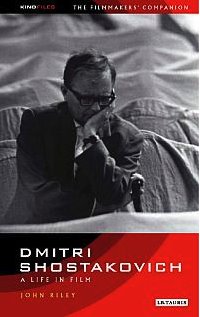
Publications include "Dmitri Shostakovich: a Life in Film" (IB Tauris) and "Discover Film Music" (Naxos, 2008).
I regularly front "I'm Ready for My Close-Up", Resonance 104.4FM's film show.
I wrote, directed and produced the evening-long show "Shostakovich - My Life at the Movies" for the South Bank Centre. It was premiered by the CBSO with Simon Russell Beale and was then produced at the Komische Oper, Berlin, with Ulrich Matthes.


.jpg)