Tuesday, 10 May 2011

Picturehouse Film Club - May

Last night's WEA Film Club at Clapham Picturehouse was great fun and the films were about as big a set of contrasts as you could imagine.

The feature was Hanna and a post-film discussion ranged over how sympathetic the lead character was, how well it mixed the thriller and fairy-tale elements, the (intentional or otherwise?) trajectory of Joe Wright's career, the publication history of the Grimm's stories, and the veracity of Hollywood accounting methods...

Then it was downstairs to the bar for a Staropramen (or whatever), a collection of short films and a chat with the makers.

We kicked off with two from Alan Walsh, whose impressively "just get on with it" approach meant that, when he realised he needed another film for the event, he just went out and made it. But first there was Mirror Mirror, a quirky little film that's a reinterpretation of something that his film school managed to destroy.


That was followed by his new one, so hot off the metaphorical moviola that, announced as Coffee, it had been retitled Short Changed.

Alan talked about his training in Prague before his regular collaborators Anthony Cozens and Ben Jeen Williams joined in to give us an insight into where they get their inspiration from and the way they work.

After that there was a distinct change of mood with three films from Rebecca Feiner.

Based in the East End, Rebecca makes films, curates, writes etc. She brought along three of her films.

Skin Code is the film element of an installation that she took to the Cannes Film Festival. In a one-person cinema, the viewer watches extreme close ups of a man's body to a soundtrack of Gregorian chant. Amusingly, while lots of Cannes visitors liked it, they were mostly men who were keen to reiterate that they didn't like it in that way...

Exhumation is another installation film, screened in the Belfry of St John's church in Bethnal Green as part of Ghost II, an exhibition curated by Sarah Sparkes and Dr Ricarda Vidal. It's another semi-abstract piece very much concerned with the body.

Rebecca was interested to see her films in different circumstances from the ones they were conceived for: a room full of people rather than a one-person box and on a screen rather than a wall and, à propos Hanna, touched on their gender concerns.


Next up was a free-form documentary, Spirit of Hackney Wick, which roams over the 2009 Hackney Wicked Arts Festival, which is organised by local artists in the shadow of the gates which have divided Hackney preparatory to the 2012 Olympics. Afterwards we talked about how the film undercuts the official propaganda about the Olympics and how it is increasingly difficult for artists to find affordable places to live and work.

Next month's film (13 June) is the documentary Senna, when director Asif Kapadia,who will also be interviewed before we move on to another selection of short films and directors (that's the films that are short, not the directors. Though, of course, if you are a short director...)

As before, feel free to get in touch if you'd like the chance to come along and show your films.

Monday, 2 May 2011

Show Your Shorts


I've started hosting a Film Club for the Workers’ Educational Association London, in association with Clapham Picturehouse (76 Venn St, London SW4 0AT, two minutes walk from Clapham Common tube).

It'll be happening every second Monday of the month, 6pm to 10pm, and the format is that after the main feature there'll be a discussion, then we'll go up to the bar to watch some short films and discuss them with the film-makers. £10 for the evening.
There's a full list of dates and details of how to submit your films at the bottom of
this post.

Meanwhile the next event is on Monday 9th May at 6pm:

HANNA, the new action/fairy tale/thriller from director Joe
Wright, plus post film discussion

"invigorating to the extreme; a feast on the eyes and ears… the most stylistically engaging recent release to come out in quite some time. …. this is new territory for Joe Wright. Two of his previous three feature films were the period pieces, Pride and Prejudice and Atonement.
Without Wright at the helm, this would have been a mediocre film with a fantastic central performance. He has transformed the material into a hip work of art with incessantly strong visual flair. Clearly influenced by many different sources, Wright puts his inspiration to good practice. His use of tracking shots, extreme close-ups, extreme long shots, handheld camera work and much more all contribute to Hanna’s singularly high-powered style. He also keeps a lot of the action in camera, making the choreography stand out. Whether creating an engaging hyper-stylistic action set piece or subjectively aligning the audience with Hanna’s experiences, Wright always has motivations for his choices and it is a delight to work through them while watching the film."

8.30pm Intermission and a chance to get a round in

9pm Show Your Shorts: two short films by Alan Walsh and three by Rebecca Feiner, with both filmmakers in conversation

ALAN WALSH
MIRROR MIRROR. The story of one man and the lengths he’ll go to fit in. Told through his relationship with his mirror, we see him try to re-invent himself to the demands of society

COFFEE. First screening of Alan Walsh’s new short!

REBECCA FEINER "mixes the confessional style of Tracy Emin with the objectivity of American conceptualist, Joseph Kosuth" - Mark Currah, Time Out, Sept.1999

EXHUMATION. "the only ghosts that haunt are the ones we carry with us." Exhumation explores memory & the ghost of violence. To survive and preserve our identity we suppress memories and choose to forget. Exhumation is the first film where the artist has chosen to place herself as performer. Originally screened in 2009 as the main installation for GHOST II, an annual exhibition in London curated by Dr Ricarda Vidal & Sarah Sparkes.

SKIN-CODE. Reversing the camera's traditional gaze, Skin-code gets up close and personal, exploring masculinity, body as landscape and the notion of a male muse. Premiered at the Cannes film festival 2003 as part of the centenary of the Lumiere brothers cinema, in an unsual DIY cinema for one - a wardrobe (Variety)

SPIRIT OF THE WICK. Capturing the spirit of the area through the annual arts festival Hackney Wicked, contradicting glossy propaganda promises of Olympic regeneration. The festival is organised by the artistic enclave living and working in the shadow of London's 2012 Olympics site, whose high security walls and infamous "blue gates" have sliced Hackney Wick in half. Premiered on 23 July 2010 as part of Spirit of the Wick, a festival of 31 short films, installations and sculpture curated by Rebecca Feiner at Stour Space, an old converted wine warehouse on Fish Island, Hackney Wick, London.

FUTURE DATES (all on the second Monday of the month at 6pm):
13 June; 11 July; 8 August; 12 September; 10 October; 14 November; 12 December

If you'd like a chance to Show Your Shorts, drop me line or contact Steve Rushton at WEA


Wednesday, 27 October 2010

Blackmail

Something I've been meaning to flag up for a while is Hitchcock's Blackmail at the Barbican, on Sunday 31 October at 8pm, with the BBC Symphony Orchestra performing a new score by Neil Brand. This will be about the fourth score I'll have heard for it but if Neil Brand's past scores are anything to go by, it should be good.

Years ago (1993, a little research rather scarily tells me), I remember seeing Jonathan Lloyd's score which, after an initial flurry, doesn't seem to get done much any more. Perhaps the fact that the Lyons Corner House scene featured a set of variations on the (still-in-copyright) Tea for Two is a disincentive. Youmans comes out of copyright in 2016, so hang onto your hats...

Oddly enough I was only doing a session comparing the sound and silent versions a couple of weeks ago, so this will be an interesting addition to the mix.

Shamefully, you have to go to Germany to get a decent DVD of both the silent and sound versions of Blackmail [Erpressung] (even though it uses NFTVA material. It also turns up in a nice, but now, I see, quite expensive box called Master of Suspense, though the selection of titles is a bit random: Champagne (1928), two Blackmails (1929), Murder (1930) and its German-language equivalent Mary [Mord - Sir John greift an] (1931), Rich and Strange (1931) Foreign Correspondent (1940), Suspicion (1941) and Under Capricorn (1949).

Hopefully the BFI's Olympic project of restoring all nine of Hitchcock's surviving silents and commissioning new scores will bring forth a grand box to replace some of the less than satisfactory transfers that we currently labour under, perhaps (and this is mere speculation) including this new Blackmail score.

In the meantime, there's still a chance to donate to the restoration fund and, of course, to have one last look in the loft for that print of The Mountain Eagle!

Tuesday, 26 October 2010

Russian Film Festival


Autumn's always a busy time for me: immediately after the London Film Festival, there'll be the Russian Film Festival

Rather than try manically to blog as we go I'll try to put a bit of perspective to both events. But a heads up for a couple of RFF strands.

They'll be marking the centenary of Tolstoy's death with a few films, including a complete War and Peace (Война и мир) - presumably the proper widescreen print rather than the TV pan-and-scan that occasionally turns up! and, even rarer, Vengerov's Living Corpse (Живой труп, 1968). Should be fascinating to see this after the LFF's revival of Ozep's silent version a couple of years ago.

The animation strand is, as usual, strong, with retrospectives of Garry Bardin and Irina Evteeva.

Bardin's dark 1990 fable Grey Wolf and Little Red Riding Hood (Серый волк энд Красная Шапочка) was on Channel 4. Once. About 15 years ago. Probably at about 3am. So it'll be interesting to see how he deals with Andersen's The Ugly Duckling, (Гадкий Утенок, illustrated above) especially as, keeping fine old traditions intact, it was banned from Russian TV.

Among Evteva's work is a version of Pushkin's Little Tragedies (Маленькие Трагедии) which again should prove an interesting compare-and-contrast with Mikhail Shveitser's 1979 effort. Evteeva races through in 38 minutes what took Shveitser (as so often in his career) a lumbering 240 minutes. A propos Tolstoy, Shveitser's Kreutzer Sonata always seems longer than its 158 minutes, though it might have been nice to include it in the festival as a little nod to Oleg Yankovsky, who died earlier this year. I've not seen his 209-minute Resurrection (Воскресение) from 1961. But there are so many Tolstoy adaptations to choose from...

Anyway, back to what is in the festival, there's a whole load more, of course focusing on recent films, so I'll report back in due course.

Paris exhibition


I should flag a festival happening in Paris' Cite de la Musique, under the banner Lenine, Staline et la Musique.

A whole series of fascinating events will entertain Parisians from now until the middle of January. Apart from the big names: Shostakovich, Prokofiev, Khachaturian etc, there'll be chances to catch undeservedly lesser-known talents like Artur Lourie (who turns up in a veiled reference in Akhmatova's Poem without a Hero), Vladimir Deshevov, Nikolai Roslavets and Alexander Mosolov. Some of them are seen as 'one-work' composers (e.g. Deshevov, for Rails), so this will hopefully be a chance to correct that impression.

More info on the festival here

Also worth noting is the very impressive (256-page) accompanying catalogue (the cover is illustrated above). I had the pleasure of penning the cinema essay - the first page of which is on the left.

Wednesday, 28 July 2010

Cinéphilia West

Whilst I don't want this blog to become yet another outlet for obituaries, it's definitely worth passing on the very sad news that Cinéphilia West - I welcomed their exhibition of Polish film posters here - has been forced to close.

An edited version of their announcement, which you can read in full on the site:

The short story is that our ex-partner and landlord, Mr Amin Taha, has reneged on an existing agreement to enter into a new lease, at market rate, at our premises at 171 Westbourne Grove, Notting Hill, and has re-taken possession of the premises with a view to sell the entire building as vacant and without an existing tenant in situ. As Cinéphilia West was occupying the premises under a temporary arrangement ahead of the formal execution of a long-term lease we have no choice but to cease operation there and seek alternative premises for our business. This is with immediate effect, as no notice was given but bailiffs imposed to re-possess the premises, leaving us completely exposed to the damage to our reputation as though the business itself was not viable or successful, which it was, and giving the impression that we are in any way at fault, which we are not. We have been torpedoed by a very unscrupulous man, but do not have the substantial means to challenge his behaviour through legal channels, despite having the full force of the law in our favour.


As you can see, this isn't any failure on their part but - well, I suppose I'd have to be careful to word this in a non-actionable manner!

Perversely, I hope that the landlord has a real buyer: it would be doubly annoying if it stays empty after he'd been persuaded to "put it on the market" by some over-enthusiastic estate agent.

Thankfully, undeterred, they're looking for new premises and asking for suggestions. The alliteration and assonance of Cinéphilia South would appeal to me - let alone the improved proximity.


Tuesday, 27 July 2010

Farewell, UKFC


AND SO, IT STARTS…

If culture was hoping for a stay of execution until October’s Comprehensive Spending Review (CSR), yesterday it was disappointed. 55 organisations chopped or merged, the most high-profile demise being the UK Film Council.

The UKFC bestrode a huge – perhaps unbridgeable – field. Simultaneously making the economic, cultural and educational cases probably proved an unmasticateable mawful, and in film funding it often tried to make sure the toast fell jam-side up, with minority shares in semi-bankable projects.

Their First Light fund successfully supported young filmmakers but there’s little for experimental and artists’ film: Nowhere Boy and Hunger, whatever they are, aren’t cutting-edge and arguably Taylor-Wood and McQueen could have found their money elsewhere. And the UKFC wasn’t interested in gallery video art.

Not that that’s necessarily bad: The senior management’s background was overwhelmingly commercial, and wisely chose to channel money to organisations who knew the subject. But there was precious little of it.

The BFI used some to programme and release on DVD artists’ films, and even commission installations from people including Mat Collishaw and the Wilson Twins. Then there’s the Independent Cinema Office, onedotzero and others servicing (usually) slightly different groups. The Digital Innovation in Film programme (co-funded by NESTA – relatively safe under its endowment) helped some small (and not so small) companies.

Beyond that are bodies largely or wholly independent of the UKFC. Having been kicked around far too much in past years LUX, with its superb archive of artists’ films is an ACE client – though they’ve also been helped by UKFC. no.w.here does some great work with precious little. There are galleries such as the Tate and the (possibly, still troubled) ICA and publisher/distributors like Wallflower Press. Outside London, though, the picture is patchier.

So how might the UKFC’s demise affect artists who work in film? At the moment it’s hard to say, but the temptation is to say “not much”. Their money – when they have it – comes from elsewhere.

So, we still await the CSR…

Thanks to axisweb, which commissioned this piece and ran it here

Friday, 9 April 2010

Varèse


Sometimes the sheer challenge of presenting a work and the exigencies of concert-planning can mean that even the most important ones exist more by reputation.

So it is with Edgar (or, depending on how he felt at the time, Edgard) Varèse. It's impossible to conceive of 20th-century (and even 21st-century) music without him, yet when was the last time you saw anything performed? Ionisation (his greatest hit) needs 13 percussionists for just 6 minutes ("What are they going to do for the rest of the concert?", thinks the administration). So here's a version broadcast on ZDF (BBC4, anyone?)*


And what about the first piece that he admitted into his canon, Amériques, with its 27 woodwind and 29 brass complemented by correspondingly large string and percussion sections? Déserts? The taped "interpolations of organised sound" might put concert halls off (though on the up-side it only needs twenty performers) but that doesn't explain why Pierre Boulez omitted them from his first recording. And then, again, from his second.

So a big welcome for the South Bank Centre's mini-fest Varèse 360, which doesn't just play the music (including a couple of UK premieres) but has added stagings and video projections.


I haven't seen it yet but it's entirely in keeping with Varèse's ideas: another of his classics, Poème électronique, was written for the Philips Pavilion at Expo '58 in Brussels, where it was broadcast through 350 or 400 speakers in a stomach-shaped space designed by Le Corbusier's assistant (later a composer) Iannis Xenakis. Le Corbusier himself oversaw the accompanying images and film clips. Though the pavilion itself was dismantled, we do have various designs, notes and stills and a stereo version of Varèse's composition, so that it was possible to make a sort of virtual recreation.

Among Varèse 360's sidebar events is a screening of the 1920 Dr Jeckyll and Mr Hyde (an uncredited Varèse played a police officer), for which Scanner has sampled the composer's works to create a new score. Safe to say that it's very different from whatever Hugo Riesenfeld might have written for the original release.

Varèse has fared a bit better on disc. Given that two, admittedly very full, CDs will seal the deal, pretty much any single disc (and actually there have been quite a lot) constitutes a significant collection, while shorter pieces like Ionisation and Density 21.5 for solo flute turn up on a number of compilations. But there have been several more or less complete surveys starting with Robert Craft, graced with a great psychedelic cover, but, like his equally pioneering Webern set, occasionally more enthusiastic than accurate. After that came [not comprehensive and in no particular order] Pierre Boulez, Kent Nagano and Christopher Lyndon-Gee.

Riccardo Chailly (carrying the imprimatur of Varése's amanuensis Chou Wen-chung) includes a couple of byways that are otherwise unobtainable and presents the original version of Amériques - Varèse's later, less resource-heavy version is generally performed. But even without those, Chailly's is the single set to get. For historical interest, you can also get the boxily recorded Frederic Waldman etc al "volume 1" (there was no volume 2) that inspired Frank Zappa.

For those who want a preview, I'll be presenting two one-hour shows as an introduction to Varèse and his works on Resonance 104.4fm (8pm on Wed 14 and Thurs 15 April). Then we'll glue them together and broadcast a single two-hour extravaganza at some point in the future.

*There's also a performance by the Ensemble InterContemporain and Boulez on Youtube: it sounds better but the close-ups and panels that come and go made me concentrate on the individual performer (actually, usually their hands) rather than the whole ensemble.

Tuesday, 6 April 2010

Maska and Stanko


Trumpeter Tomasz Stanko's Barbican concert reflected the two halves of a career split by tragedy.

In 1963 he joined the brilliant composer-pianist Krzysztof Komeda's band, becoming his closest colleague. Komeda, one of the pioneers of European jazz, was equally inspired by classical music and free jazz and, after Roman Polanski's early short Two Men and a Wardrobe (Dwaj ludzie z szafa, 1958), scored around forty films. In 1969, aged 38, he died (depending on who you believe, as a result of a car accident or when some drunken horseplay went wrong).

Stanko, who had up to then been content within Komeda’s group, set out on his own, but continued to play his friend's music, climaxing with the 1997 album Litania, which itself became a classic.

But the evening began with the world premiere of the Brothers Quay’s new short film, Maska, based on Stanislaw Lem’s 1976 short story. Anyone who has seen their work (this excellent two-disc set collects their short films) will know what to expect: odd animated marionettes playing out oblique but disturbing dramas in gelid, granular light. Maska showed their usual love of craftsmanship: even a shot that could be achieved in a few minutes in live action - a diaphanous cloth being drawn back - was carefully animated. Rich, luminous visuals – the dense shadows of the cavernous set, pierced by shafts of glowing highlights, are accompanied by a soundtrack that included sections of Penderecki’s De Natura Sonoris.

A being, created limb by limb, transmutes first into a woman and then something more, taking us from mystery, through unease to mythic near-horror.

Ignoring the story's possible political interpretations, the Quays are more interested in the robotic Frankenstein: a protagonist that describes its own birth and development, re-forming itself by sheer force of will; shape-shifting and obfuscating its personality, making us wonder about its old husk (or heart?), leaving us peering in on a strange cold world, as compelling as it is unsettling.

As the last credit held the screen, Stanko’s sextet appeared and launched into a selection from his own score to the 1999 film Egzekutor. Starting insouciantly, Stanko’s husky trumpet was shadowed by soprano Justyna Steczkowska, each taking turns to ride over the other. Saxophonist Adam Pieronczyk occasionally joined in, adding more subtle colours to the duet. Meanwhile Steczkowska, in her spangly mini-dress, once or twice broke into a brief, self-absorbed, gentle wiggle. In the middle Pieronczyk’s dense and harder driven solos contrasted with pianist Dominik Wania, who alternated fluid runs with cool but decisive chords.

The second half was the Komeda tribute – majoring on his films with Polanski – minus Steczkowska, but with accompanying visuals: archive and original footage, clips from Knife in the Water and live relays of the musicians. In the event, it was dominated by the live relays – of the rest there was too little to be something and too much to be nothing.

The highlight was an extended medley, Wania again showed his versatility punching out a jagged but contemplative opening and later returning for a dreamy Debussian response to Pieronczyk’s tightly frantic solos. It was all held together by Stanko’s recurring Spanish-tinged trumpet.

For an encore, the dream sequence from Rosemary’s Baby was accompanied by one of Komeda’s greatest hits – riotously welcomed by the crowd – Sleep Safe and Warm again with Stanko and Steczkowska leading. The sextet beautifully captured the music’s lullaby mood, but abandoned the original orchestra’s bitterly ironic saccharine tone - and of course ignored this sequence's hypnotically somnolent soundscape. The new approach reflected the deep well of Komeda’s creativity, making a fitting end to the evening.

Waterloo (near Waterloo)


A quick note to point out (to those who don't already know) that I'll be at the Royal Festival Hall on Thursday 22 April introducing Karl Grune's 1929 film Waterloo, with the Philharmonia Orchestra playing the UK premiere of Carl Davis' score, under the composer himself. The film starts at 7.00 but I'll be talking at 5.45.

Sunday, 4 April 2010

Shutter Island


Somewhat belatedly (the problem of coordinating diaries), I just saw Shutter Island. A lot of reviews have concentrated on the labyrinthine (dare I say implausible?) plot though the "twist" - guessable in essence, if not in detail, within the first few minutes - bothered me less than in The Sixth Sense, which simply wasn't good enough to stop me being annoyed at how its self-proclaimed USP had failed.


Others have dissed it because of the plethora of movie references, majoring on the acrophobic Vertigo and Black Narcissus and another film which, were I even to mention it, might give my smarter readers (as if you aren't all smart!) a clue as to what happens. As if it's the first time Scorsese's ever done something like that!
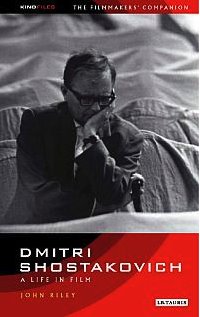
But back to Shutter Island and a number of critics have talked about the music. Scorsese does use original scores: Howard Shore followed on from a blossoming relationship with Elmer Bernstein that was cut cruelly short by the composer's death* (or the intervention of Harvey Weinstein, if you believe what some say). But many of his soundtracks rely on pre-existing music in a way that's worth a study in itself. Still, it works for Woody Allen, though a more pertinent comparison - which we'll come back to - is Kubrick.

The music was chosen by Scorsese's old friend Robbie Robertson - The Last Waltz is their most famous collaboration but he's been involved with several other films. Now, looking at the playlist, the first name to come to mind would not be the driving force behind The Band, though Paramount were so excited that their press release didn't even bother to mention the names of the actual composers.**

But think about the filmic associations of some of the names on the list and the fog lifts slightly. 2001, The Shining and The Exorcist share Shutter Island's needle-drop aesthetic and all feature the "acceptable faces of modernism" Ligeti and Penderecki. Shutter Island and The Shining even share Ligeti's Lontano. In later years those two have been joined by Alfred Schnittke (who duly turns up here).

The soundtrack divides into three types of music. There are some vintage pop songs while the mournful post-minimalism quotient is filled with Ingram Marshall, John Adams, Lou Harrison and the oscillating On the Nature of Daylight by Max Richter, best-known for Waltz With Bashir. At the end of the film, it returns as a new underscore to Dinah Washington's recording of This Bitter Earth.

But there's also a gratifyingly large chuck of unrepentant modernism, though as usual such music accompanies threat, madness, violence, etc. The aforementioned Lontano with its wonderful thick yet fluid textures, dark and glistening, the hypnotic ritual of Morton Feldman's Rothko Chapel, a bit of middle-period Gianto Scelsi - the surprising step-father of TV Times' former agony aunt and Eurovision Song Contest presenter Katie Boyle - which precedes his later, Zen-like utterances. Probably the most extreme piece is Nam June Paik's Hommage à John Cage, a post-fluxus mixture of pre-recorded tape and the sounds of random live performance. But undoubtedly the 'tune' that most of the audience will go out whistling is Penderecki's long-gestating Third Symphony. The insistent passacaglia theme (actually more of a rhythm) sits as solid as Shutter Island itself.

As is the way with film soundtracks, a lot of the pieces are abbreviated or overlaid with dialogue so it's great to think that soundtrack purchasers will be exposed to the full, mad glory of Nam June Paik, the middle section of Christian Zeal and Activity with its looped recording of a preacher, or the near sub-ambient Brian Eno - all things that would probably have passed them by in the sound mix.

Anal emo teenagers will point out that Mahler's Piano Quartet, a long-ignored student work, wasn't actually premiered until 1965, eleven years after the film in which a record of it is played was set and might even question why Max von Sydow makes a point of mentioning its key signature: nobody who actually knows about classical music bothers with that kind of detail and anyway it's the only one he wrote (that we know about). Anal emo pensioners will point out that This Bitter Earth came out in 1960 (though we can bat them aside by pointing out that it's a non-diegetic track).

For me, the film that came to mind was Cape Fear. They're both genre pieces that weren't generated by Scorsese: Cape Fear started out as a Spielberg project and Shutter Island moved from Wolfgang Petersen to David Fincher before he picked it up. Nevertheless he made them both his own and, ironically had two of his biggest hits. And the relentless and increasingly frenetic Penderecki, a thick block of sound coming out of Polish sonorism can't help but remind us of Bernard Herrmann's original Cape Fear, as channelled by Elmer Bernstein.

Anyway, you can get the soundtrack from Rhino Records, here.

*Having said that, he's also used ... errrrrr ... Philip Glass and U2.

** For your delectation here's a proper track-list (some of the pieces are on slightly obscure labels so I'm giving them a leg-up, with links):

1) Ingram Marshall: Fog Tropes. Brass Sextet from the Orchestra of St Lukes, pre-recorded tape/John Adams
2) Penderecki: Symphony No 3 (passacaglia). National Polish RSO/Antoni Wit
3) Cage: Music for Marcel Duchamp. Phillip Vandré (prepared piano) [written for Hans Richter's film Dreams That Money Can Buy]
4) Nam June Paik: Hommage à John Cage [tape and live performance]
5) Ligeti: Lontano. Vienna Philharmonic/Abbado
6) Feldman: Rothko Chapel 2. UC Berkeley Chamber Chorus, David Abel (viola), Karen Rosenak (celeste), William Winant (percussion), California EAR Unit
7) Cry. Johnnie Ray
8) Max Richter: On the Nature of Daylight. Max Richter
9) Scelsi:Uaxuctum: the Legend of the Mayan City, Which They Themselves Destroyed for Religious Reasons. Concentus Vocalis, soloists, Vienna RSO/Peter Rundel [the soundtrack album only has a section of the full piece]
10) Mahler. Piano Quartet. Prazak Quartet
11) Adams. Christian Zeal and Activity. San Francisco SO/Edo de Waart
12) Lou Harrison: Suite for Strings (Nocturne). The New Professionals Orchestra/Rebecca Miller
13) Brian Eno: Lizard Point. Brian Eno [not easy to find on the website but it's on their re-release of Ambient 4: On Land]
14) Schnittke: Hymn no 2. Torlief Thedéen (cello) Entcho Radoukanov (double bass) [sadly, I don't think that Borodin Quartet cellist and dedicatee Valentin Berlinsky ever recorded it]
15) Cage. The Root of an Unfocus. Boris Berman (prepared piano) [For what it's worth, Merce Cunningham, for whom it was written. said this piece was about fear, awareness of the unknown, struggle, and the final defeat]
16) Ingram Marshall: Prelude: The Bay [originally the musical element of Alcatraz, a multimedia piece about the island]
17) Bennie Benjamin and George David Weiss: Wheel of Fortune. Kay Starr
18) Lonnie Johnson: Tomorrow Night. Lonnie Johnson
19) Clyde Otis (arr. Max Richter) This Bitter Earth, Dinah Washington (and Max Richter)